
Key Insights:
|
|
|
Institutional investors are navigating a sustainability landscape that is both more complex and more consequential than ever. Regulatory expectations continue to evolve, client scrutiny is intensifying, and the scope of ESG considerations is expanding across asset classes and geographies. Yet, despite these pressures, investor commitment to sustainable investing remains resilient.
Findings from Morningstar Sustainalytics’ The 2025 State of ESG Data Report, based on a global survey of financial market participants, suggest respondents are moving decisively beyond a compliance‑led approach. Investors are increasingly seeking data that provides strategic insight, forward‑looking analysis, and seamless integration into investment workflows — treating ESG not as a reporting obligation, but as a source of competitive advantage.
Beyond Box-Ticking: Why ESG is no Longer Just About Disclosure
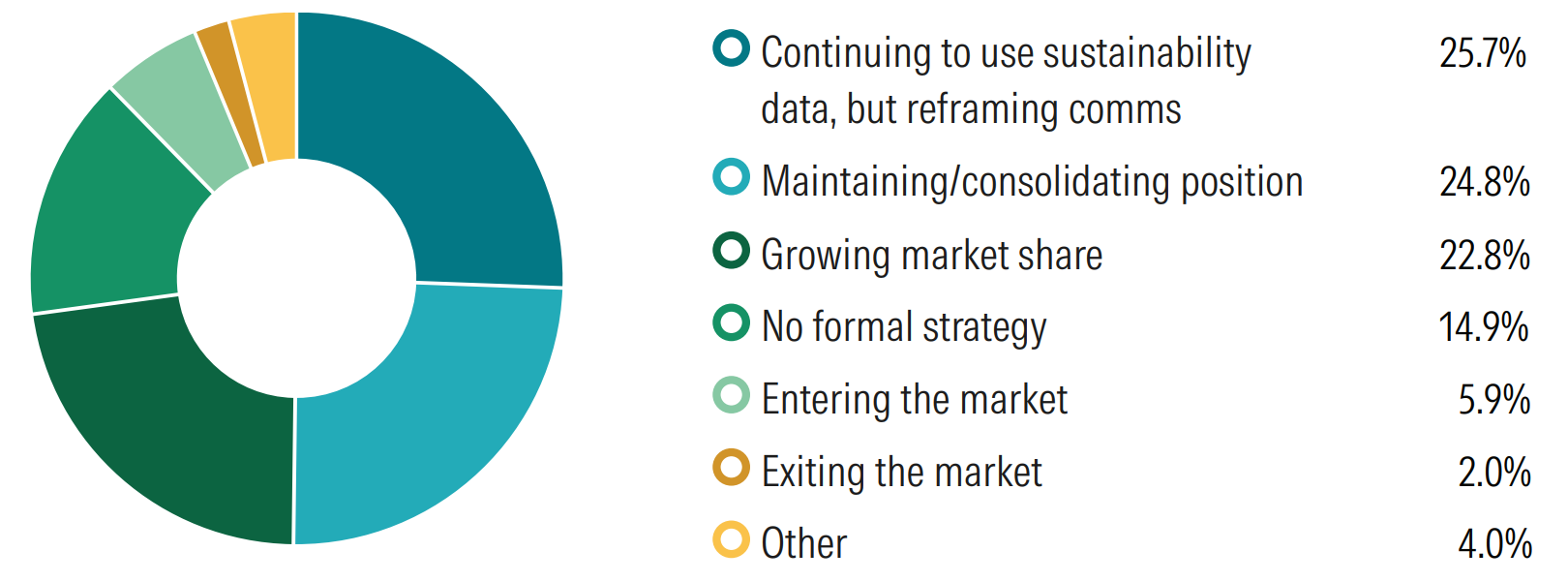
Sustainable investing continues to gain ground, even amid regulatory uncertainty and geopolitical volatility. Nearly half of survey respondents said they are either growing (22.8%) or maintaining (24.8%) their sustainable investing strategies, while an additional 25.7% reported continuing to use sustainability data but reframing how they communicate around it (see Figure 1). Very few respondents (2%) indicated an intention to exit the market entirely.
Instead, expectations point toward gradual expansion. Fifty-three percent of respondents anticipate the number of market participants will remain stable over the next year, while 60% expect participation to grow over the next three years.
This combination of near‑term caution and long‑term optimism reflects a market in transition. ESG considerations are no longer viewed as a peripheral or reputational concern, but as a central lens for identifying long‑term value and managing risk.
Figure 1. Sustainable Investment Strategies Being Deployed
Source: Morningstar Sustainalytics. Based on survey responses collected between May 15 and June 10, 2025. For informational purposes only.
Data Quality is a Defining Issue
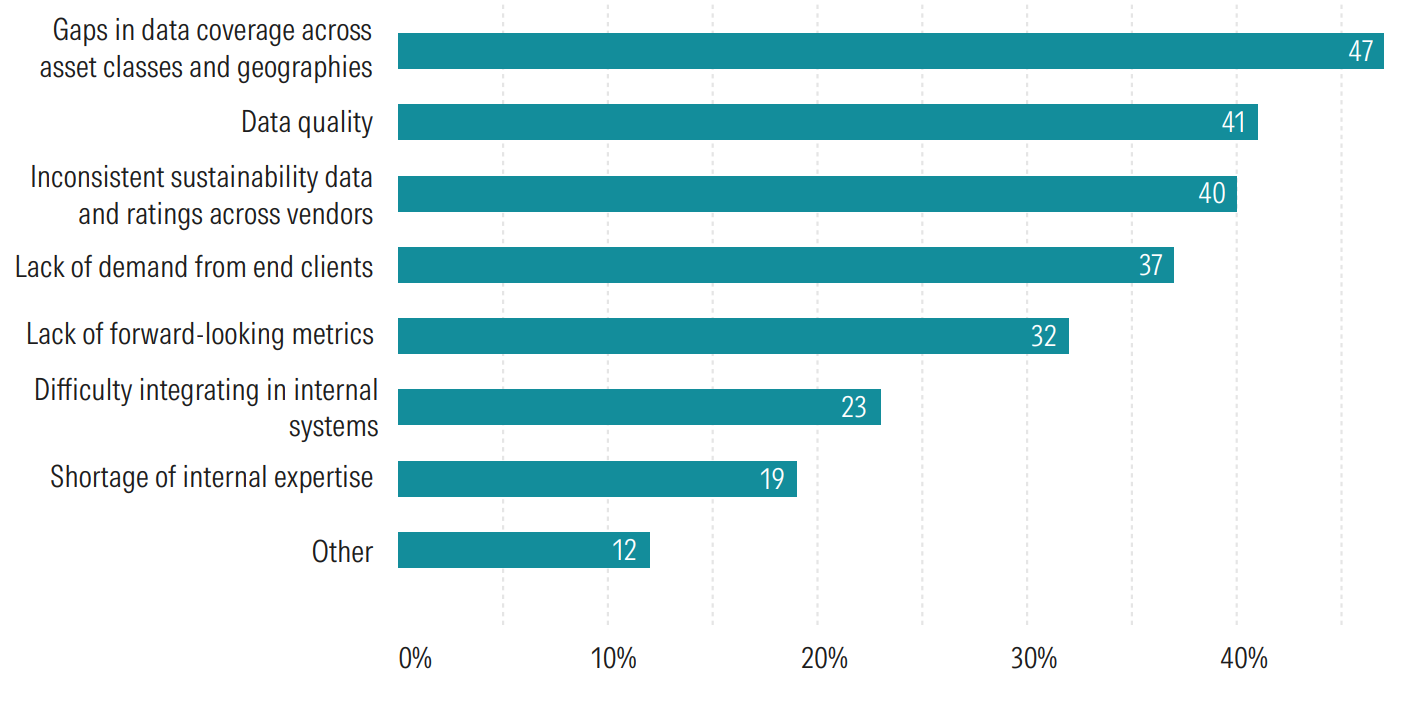
As sustainable investing strategies mature, investors are becoming more explicit about the challenges they face. The most significant challenges identified in the survey were gaps in data coverage across asset classes and geographies (47%), data quality issues (41%), and inconsistencies across vendors (40%) (see Figure 2).
As investors adopt a “whole-of-portfolio" approach that extends beyond listed equity and fixed income — into areas such as private markets and real assets, where ESG data availability has historically been limited — these challenges become particularly acute.
At the same time, investors face increasing disclosure requirements. Standards such as the International Sustainability Standards Board (ISSB) framework and the Corporate Sustainability Reporting Directive (CSRD) emphasize the use of standardized, publicly disclosed ESG data. As a result, access to comparable, reliable information is no longer optional.
Figure 2. Sustainable Investing Strategy and Implementation Challenges (%)
Source: Morningstar Sustainalytics. Based on survey responses collected between May 15 and June 10, 2025. For informational purposes only.
Forward-Looking ESG Insights are Becoming a Priority
While regulation‑aligned data was ranked as the most important sustainability data area for the coming year (58%), the survey indicated a growing appetite for insights that help investors anticipate future risks and opportunities. For example, 91% of respondents classified greenhouse gas emissions data as being either the most important or a somewhat important area for their firm over the next 12 months, closely followed by data relating to transition risk assessments (88%).
However, when asked to assess what data is “unique and valuable,” respondents pointed to forward‑looking transition risk models (35%), financial and impact double materiality assessments (33%), and nature and biodiversity‑related data (33%).
This divergence suggests that while regulatory disclosures are an important driver of ESG analysis, investment strategies are increasingly demanding forward-looking insights — data that sheds light on how companies are positioned for climate transition, physical risk, and emerging sustainability pressures.
Embedding ESG into Investment Workflows
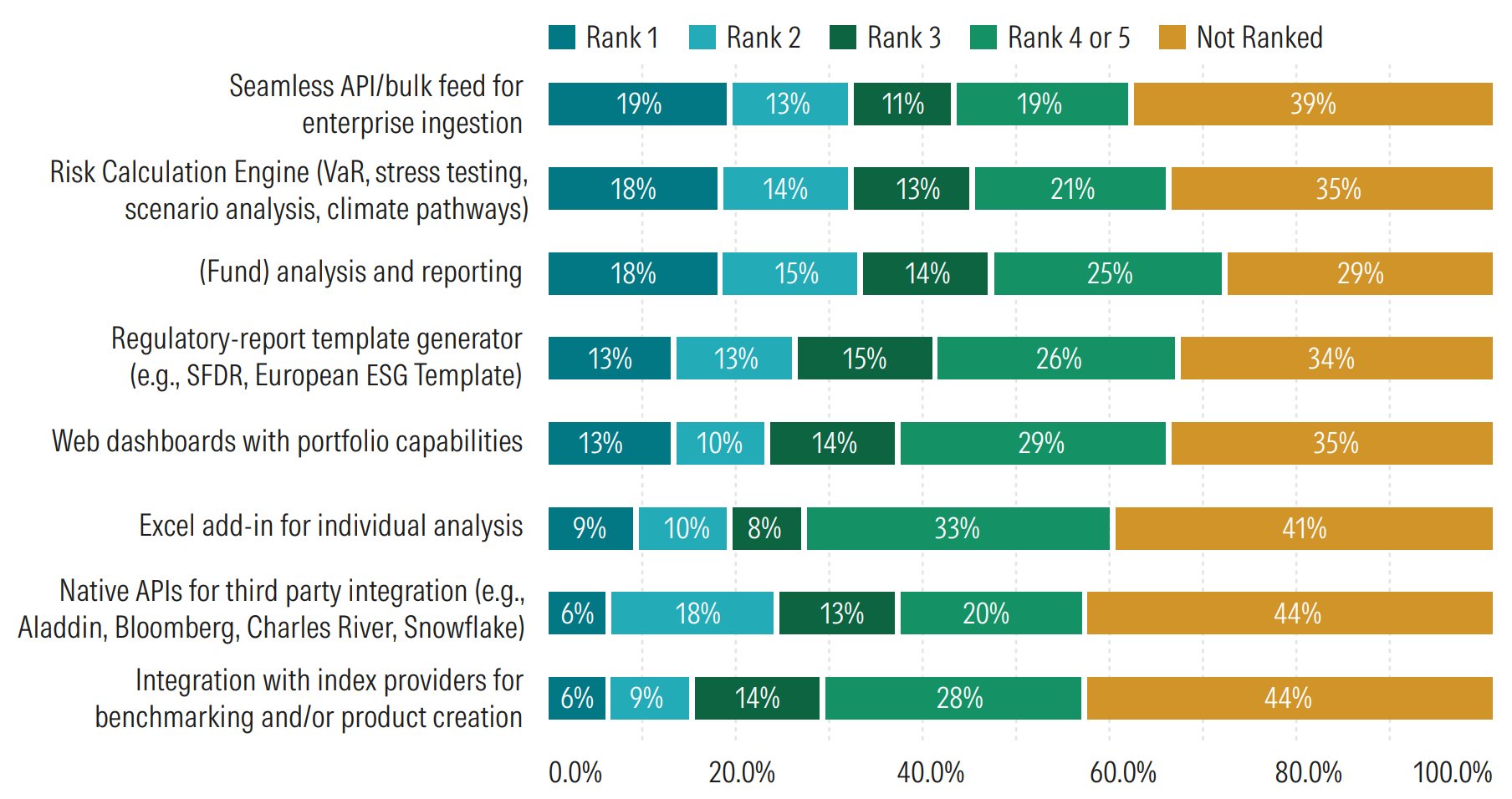
The 2025 State of ESG Data Report makes clear that the value of ESG data depends heavily on how easily it fits into existing investment processes. Investors ranked seamless APIs or bulk feeds for enterprise ingestion as the most important functional capability (19%), followed closely by risk calculation engines (18%) and fund analysis and reporting tools (18%) (see Figure 3).
Figure 3. Areas of Sustainability Most Important in Terms of Functionality and Integration (%)
Source: Morningstar Sustainalytics. Based on survey responses collected between May 15 and June 10, 2025. For informational purposes only.
When asked to identify which functionality was both important and uniquely valuable, respondents again emphasized tools that operationalize ESG data — particularly fund analysis and reporting (25%), risk calculation engines (19%), and enterprise‑ready APIs (16%).
This emphasis reflects a broader market maturity. ESG considerations are no longer treated as an overlay or add‑on, but are increasingly embedded directly into portfolio analytics, stress testing, compliance frameworks, and enterprise systems. Integration, scalability, and interoperability have become as critical as the underlying data itself.
The Next Phase of ESG Data Maturity
Taken together, the findings of the report point to a committed, demanding market. Institutional investors remain engaged in sustainable investing, but their expectations of ESG data have sharpened; high‑quality, standardized disclosures are a prerequisite, not a differentiator. Increasingly, value lies in forward‑looking insights, consistent coverage across asset classes, and tools that integrate sustainability data seamlessly into decision‑making.
As ESG data becomes more deeply embedded within investment processes, firms that can translate complexity into clarity — and data into action — will be better positioned to navigate both regulatory expectations and long‑term sustainability risks.
For investors seeking a deeper understanding of these shifts, alongside detailed analysis, charts, and commentary, read the full report, The 2025 State of ESG Data. You can also share your insights in this year's survey by clicking the image below.
.tmb-thumbnl_rc.png?Culture=en&sfvrsn=a680a273_1 "2026_SUS_Blog_Exploration_V5_SIP_Resource_Center_Sans_Type (1)")