.png?sfvrsn=e5b699b4_0 "David Pagliaro")
Private markets want public-market capital. Are they ready for public-market scrutiny?
Private market investments are now a mainstay of institutional portfolios. Yet while allocations have grown, the information available to investors has not kept pace.
That matters because many of today's private companies no longer resemble the venture-backed startups traditionally associated with private markets. Some of these companies now rival public companies in terms of market influence and investor relevance, yet investors often have far less insight into how they are governed, who controls them, and the risks they face.
Private markets were never meant to mirror public markets. But when private companies reach the influence and complexity of major listed businesses, investors should expect a comparable level of transparency. Listing status alone is becoming a poor proxy for disclosure expectations. A company’s economic significance is a better indicator that it warrants greater scrutiny.
The Transparency Gap
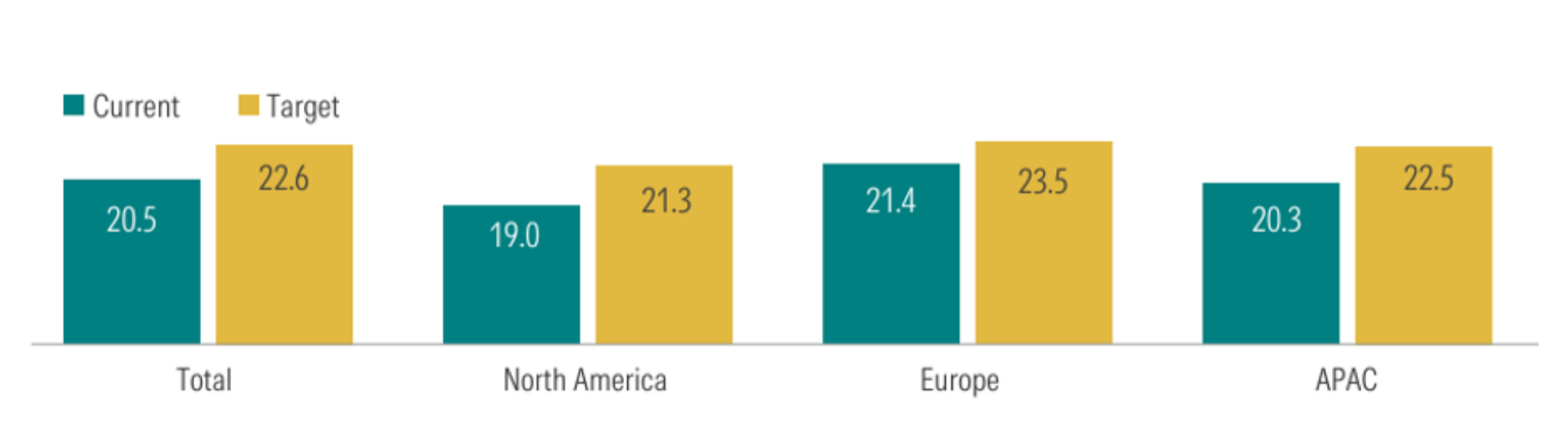
Institutional investors are attracted to private markets for diversification benefits, alternative return sources, and early access to unlisted companies. Based on findings from our 2025 and 2026 Asset Owner Surveys, they continue to increase allocations to private markets, targeting allocations >20%. This tells us that private equity and private credit are playing an increasingly important role in portfolio construction.
Current and Five-Year Targeted Percentage of Total AUM invested in Private Markets (Average) (%)
Source: Morningstar Indexes, Morningstar Sustainalytics. Voie of the Asset Owner Survey 2025: Quantitative Analysis.
At the same time, companies are staying private for longer. Businesses that might once have sought a public listing much earlier are now able to raise substantial amounts of capital through successive private funding rounds. As we see more institutional capital flowing into private markets, it becomes harder to justify uneven disclosure expectations based solely on whether a company is publicly listed or not.
This shift in capital is driving a transparency gap. Institutional investors can gain meaningful exposure to companies with enormous economic significance without receiving the same volume of disclosure typically available in public markets. As a result, investors are seeking independent analysis that can help assess governance, risks, ownership structures, and valuation assumptions in some of the largest private companies.
SpaceX illustrates why investors need this data. Long before the SpaceX IPO, investors were eager for exposure to the company. Its growth story, market position, and technological achievements generated a lot of interest, helping drive valuations higher with successive funding rounds.
Once the spotlight associated with a public listing arrived, however, many of the questions dominating the debate moved from rocket launches and growth projections to governance and longer-term risks. This is reflective of the kinds of questions investors routinely ask of public companies when trying to determine whether valuation accurately reflects underlying fundamentals.
Independent research on SpaceX illustrates the value of greater scrutiny. Morningstar Sustainalytics assigned the company a Severe ESG Risk Rating in its most recent company report, while Morningstar equity research highlighted a gap between private-market valuations and estimates of intrinsic value. Whether investors agree with those conclusions or not isn’t notable here, it’s that large private companies are increasingly subject to the same questions investors ask of major public companies: How effective is governance? Are risks being properly managed? Does valuation reflect underlying fundamentals?
Why This Matters for Institutions
For institutional investors, transparency is fundamental. It sits at the heart of risk management, governance, and long-term stewardship. Public markets are supported by disclosure requirements, regulatory oversight, and continuous price discovery. Private markets operate differently. Information is often shared through contractual arrangements and reporting standards that vary between managers, strategies, and underlying investments. Many investors regard that flexibility as one of the strengths of private markets.
The challenge is that investor oversight and frameworks have not evolved as quickly as private markets themselves. Many institutions are looking for greater consistency in how information is collected, reported, and analysed, because they need confidence that risks are being properly understood.
You can already see this in the growing use of public-market research frameworks in private markets. For example, earlier this year we expanded our Controversies Research to cover constituents of the Morningstar PitchBook Unicorn 30 Index, including OpenAI, Anthropic, and Stripe, giving investors more access to independent, comparable insights into some of the world's largest private companies.
Investors are beginning to evaluate disclosure through a different lens. Historically, ownership structure determined reporting expectations, but now we are seeing investors focusing on economic significance instead. The larger and more influential a company becomes, the stronger the case is for more information and disclosures, whether its publicly listed or not.
Clarity Over complexity
Discussions about transparency often focus on financial reporting, but sustainability and governance data are also a piece of the puzzle. Factors such as physical climate risk and business conduct influence long-term value creation, making them important considerations for institutional investors assessing risk and resilience.
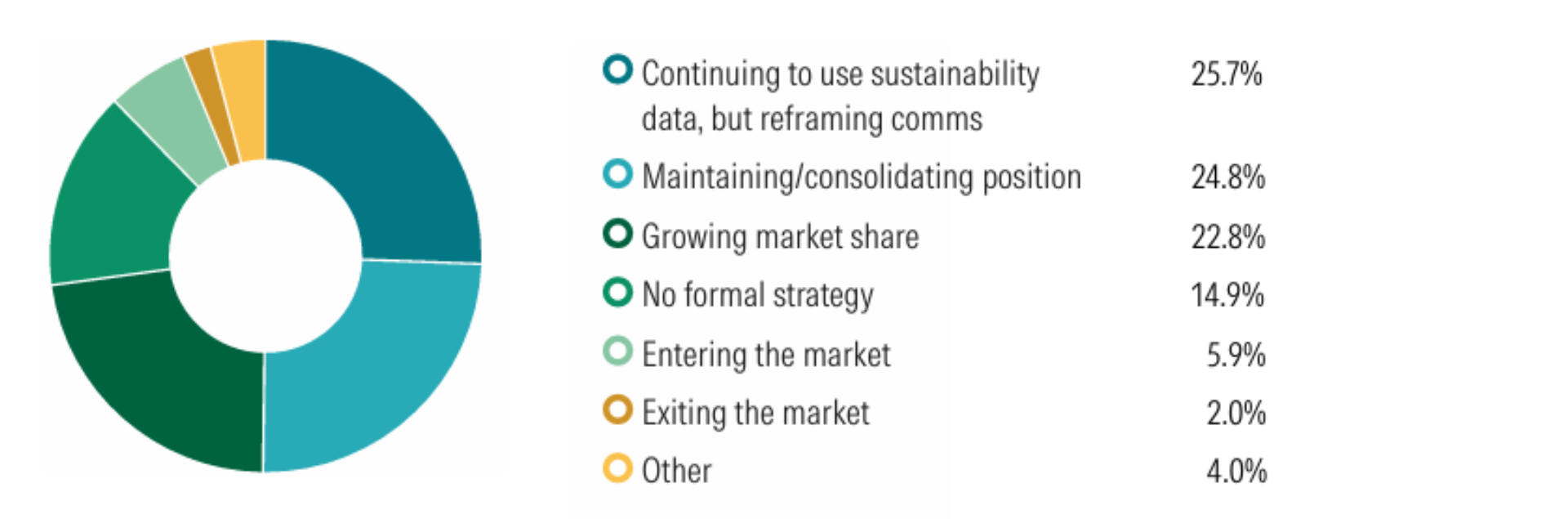
Flows into sustainable funds have faced real headwinds in recent years, particularly in the US. But the longer-term trend tells a different story: globally, sustainable funds returned to positive territory in both Q1 and Q2 2026, and fund assets remain nearly six times larger than they were at the end of 2018. Investor behaviour backs this up; nearly three quarters of respondents to our 2025 State of ESG Data Survey say they continue to integrate sustainability factors into investment decisions, with growing emphasis on outcomes rather than labels, a finding echoed by PitchBook's 2025 Sustainable Investment Survey, where 72% of LPs and GPs report the same.
Sustainable Investment Strategies Being Deployed
Source: Morningstar Sustainalytics. The 2025 State of ESG Data Survey Report.
So while the labels attached to this kind of investing may be shifting, investor demand for sustainability information hasn't gone anywhere. And that demand doesn't stop at the public markets. As private companies grow larger and attract more institutional capital, investors increasingly expect the same independent insight into governance, business conduct, and sustainability-related risk that they've come to rely on with public companies. A material risk doesn't become less material because a company stays private.
Financial statements explain what has happened. Governance and sustainability data help investors understand what may happen next. Together, they can offer a more complete picture of risk and opportunity.
A Counterargument Worth Considering
Not every disclosure framework developed for public markets belongs in a private-market setting.
Private markets derive part of their appeal from operating differently. Lower reporting burdens can give management teams greater flexibility and allow companies to focus on long-term growth rather than quarterly market expectations. Just as importantly, the relationship between a sophisticated limited partner and a general partner is fundamentally different from the relationship between a public company and millions of shareholders.
While private markets today are not the same as they were a decade ago, they maintain fundamental differences to public markets. As larger companies are stay private for longer and institutional ownership continues to grow, so should investor demand for transparency.
The Path Forward
It’s clear that investors need access to better information to help them assess risk, allocate capital, and fulfil their fiduciary responsibilities. This is a complex issue with no single silver bullet. Different asset classes, investment structures, and stages of company development require different approaches.
The debate is often framed as whether private markets should become more like public markets, but that is a very broad question. A better question is: should disclosure expectations continue to be determined primarily by ownership structure?
Private companies do not need to behave like public companies. But they do need transparency that reflects the significance of the businesses in which they invest. In the years ahead, disclosure is likely to be judged less by whether a company is public or private and more by how economically important it has become.
This article was originally published in IPE's October issue in print and online.