

Key Insights:
|
|
|
Amid Europe’s rearmament push and rising geopolitical tensions, sustainability-oriented investors are reassessing long-standing exclusions — particularly around controversial weapons, a term with no universally agreed definition.
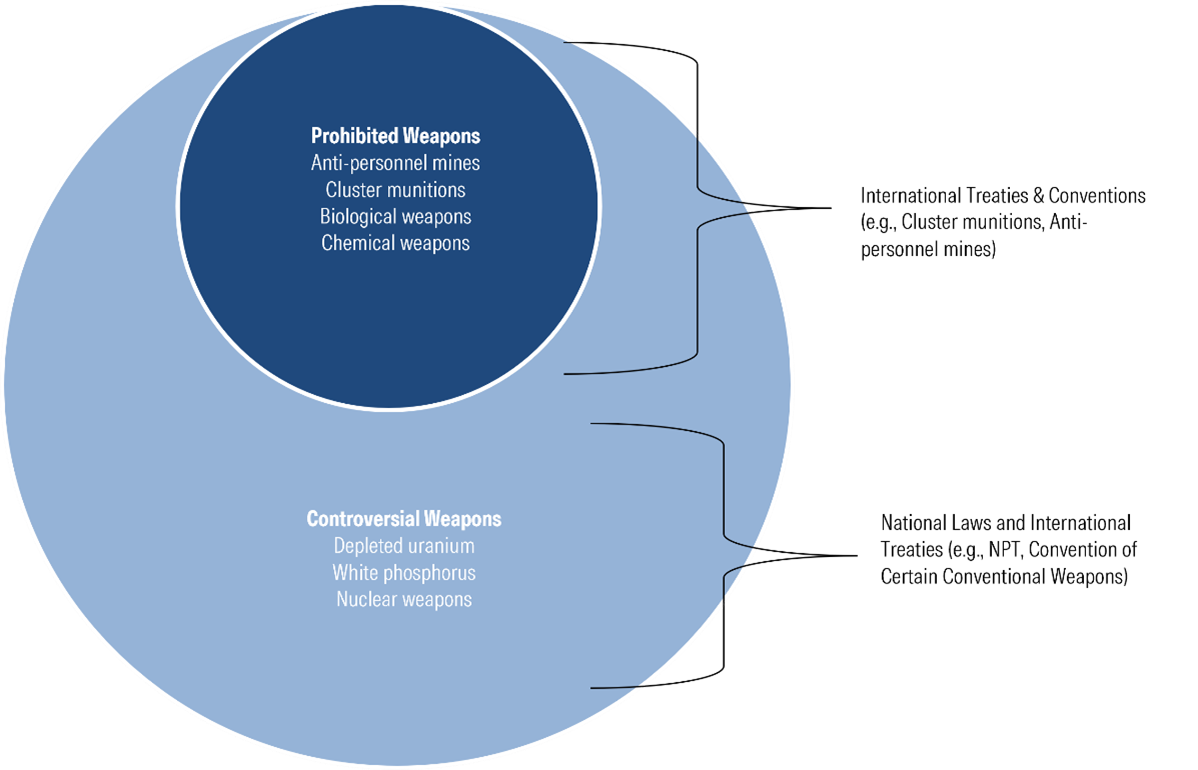
In its Defense Omnibus Package, unveiled in June 2025, the European Commission clarified that the EU sustainable finance framework is compatible with investments in the defense sector, with the exception of weapons banned under major international agreements. To provide greater clarity, the commission amended the regulatory language, replacing “controversial weapons” with “prohibited weapons”.1 This amendment matters because investor exclusion practices often go further than EU rules (as we also note in a previous article), in this case by excluding additional weapons such as depleted uranium, white phosphorus, and nuclear arms, for instance. Increasingly though, investors are reintegrating nuclear weapons into their investable universe.
This article presents recent developments involving countries and companies linked to prohibited weapons, as well as other weapons considered controversial but not excluded under sustainable finance policies.
What are Prohibited Weapons?
Within the EU sustainable finance framework, prohibited weapons — which were previously referred to as controversial weapons — include anti-personnel mines, cluster munitions, and biological and chemical weapons.2 The use, possession, development, transfer, manufacture, and stockpiling of these weapons are prohibited by international conventions that most EU member states are parties to. These conventions include the following:3
Convention on the Prohibition of the Use, Stockpiling, Production and Transfer of Anti-Personnel Mines and on Their Destruction, also known as the Ottawa Convention (1997)
Biological Weapons Convention, formally known as “The Convention on the Prohibition of the Development, Production and Stockpiling of Bacteriological (Biological) and Toxin Weapons and on their Destruction” (1972)
Some 165 countries, including all 27 EU members, the United Kingdom, Canada, and Ukraine, have signed, ratified, or acceded to the convention on anti-personnel mines. Major nations such as the United States, India, Russia, China, and South Korea have opted not to join.4 Also, given the Russia-Ukraine war and rising geopolitical tensions, Estonia, Finland, Latvia, Lithuania, Poland, as well as Ukraine, have recently reassessed their positions and are planning to withdraw from the Ottawa Convention.5,6
Meanwhile, the Convention on Cluster Munitions has 111 States Parties and 12 signatories. The United States, Russia, China, India, and South Korea remain outside of this framework as well, while Lithuania opted out of this convention in March 2025.7
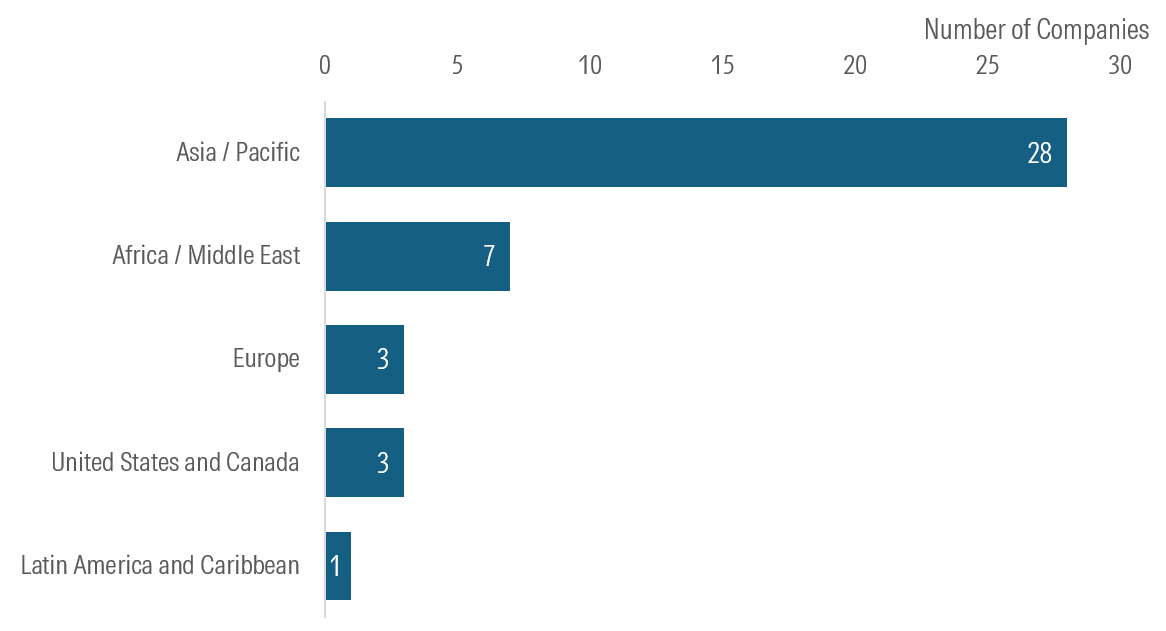
As a result of broad treaty adoption, the use of anti-personnel mines and cluster munitions has declined significantly over time, with only a small number of companies still involved in related activities. Out of Morningstar Sustainalytics’ coverage universe of over 25,000 companies, only 42 companies are currently involved in the production, research and development, or distribution of anti-personnel mines and/or cluster munitions;8 these companies are domiciled in countries that have not signed the relevant treaties. Among these companies, three are European, privately owned firms based in Romania, Greece, and Serbia. Most companies are based in Asia, including China, and South Korea.
Figure 1. Regional Spread of Companies with Involvement in Anti-Personnel Mines and Cluster Munitions Weapons
Source: Morningstar Sustainalytics. For informational purposes only.
Note: Data as of September 2025 and based on the categories of involvement in controversial weapons.
Meanwhile, 193 countries are party to the chemical weapons convention — only Egypt, North Korea, and South Sudan have not signed.9 Similarly, 189 countries are party to the Biological Weapons Convention,10 with African countries such as Namibia, South Sudan, Chad, and Djibouti among the non-signatories. As a result, no company within Sustainalytics’ coverage universe is currently involved in biological or chemical weapons.
Which Weapons are Not Prohibited, but Remain Controversial?
Beyond the treaties underpinning the EU sustainable finance framework, other international or national policies can further guide investors in distinguishing between defense sector companies that are acceptable to finance and those that are not.
For instance, Belgium forbids the financing of depleted uranium weapons.11 According to Sustainalytics’ data, only seven companies in our research universe (as of October 2025), including five from the United States, have been identified as directly involved in activities that contribute to the lethality of such weapons. There is no additional international convention on depleted uranium munitions.
Another relevant treaty is the Convention on Certain Conventional Weapons, under which weapons designed to primarily set fire to objects or harm civilians are prohibited.12 The use of white phosphorus may violate this treaty when this substance is intentionally used as an incendiary weapon against civilians.13 However, white phosphorus has other uses in defense and can also be used for signaling or screening (as a smokescreen). Currently, there is no comprehensive convention or legal framework that explicitly bans or regulates its use. Sustainalytics’ research universe includes 59 companies currently engaged in business activities related to any such use of white phosphorus beyond incendiary weapons.
Figure 2. Spectrum of Controversial Weapons
Source: Morningstar Sustainalytics. For informational purposes only.
The Case for Investing in Nuclear Weapons
Another type of weapon that can be viewed as controversial but is not prohibited under the EU sustainable finance framework is nuclear weaponry. While nuclear weapons have historically been excluded from many ESG-focused investments, the European Commission’s clarification in its Defense Omnibus Package does not list them as prohibited weapons.14
Several international treaties govern the use of nuclear weapons, including the 1968 Treaty on the Non-Proliferation of Nuclear Weapons (NPT). With 191 signatories, the NPT is the most widely adopted international agreement aimed at preventing the spread of nuclear weapons, promoting the peaceful use of nuclear energy, and advancing nuclear disarmament.15
Among the countries known to possess nuclear weapons, only five — the United Kingdom, the United States, France, China, and Russia — have signed the NPT, while India and Pakistan are the most prominent nuclear-armed states that have not signed the NPT. Other countries, such as Germany, Italy, and Spain, are non-nuclear weapons state signatories to the NPT, meaning that they have agreed not to manufacture nuclear weapons and related components.16
Currently, many asset managers and asset owners are reviewing their strategy on nuclear weapons-related investment vis-à-vis ESG investing. Among the financial market players that have revised their investment strategy are Allianz Global of Germany, the asset management arm of Danske Bank of Denmark, and Belfius of Belgium — each now allows investment in companies aligned with the NPT, excluding only those companies headquartered in non-NATO countries.17,18,19
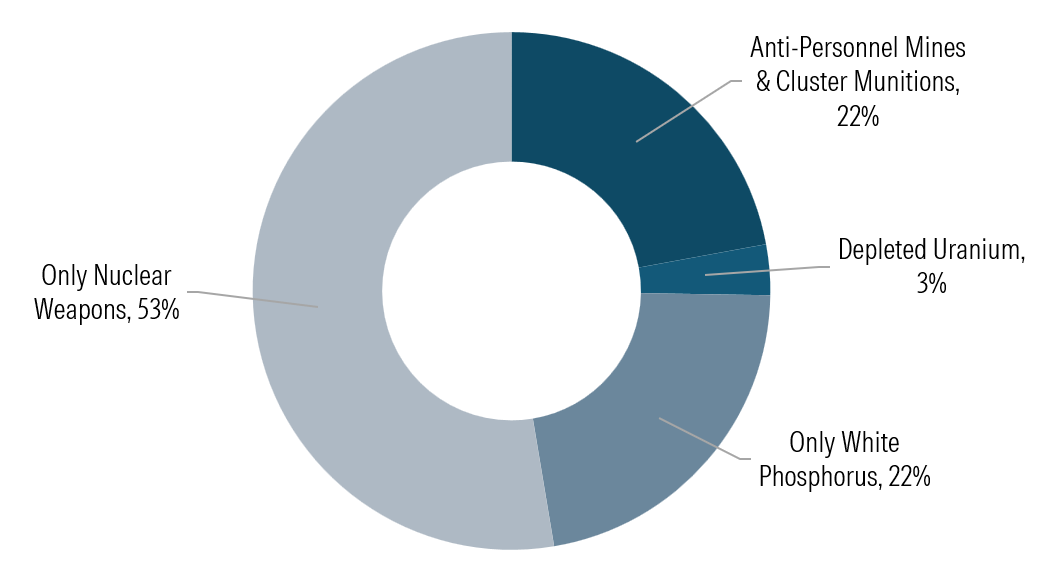
Figure 3. Share of Companies Involved in Different Types of Controversial Weapons
Source: Morningstar Sustainalytics. For informational purposes only.
Note: Data as of September 2025 and based on the categories of involvement in controversial weapons.
According to Sustainalytics’ data, 110 companies in our coverage universe (as of September 2025) are involved in nuclear weapons-related activities, including 82 domiciled in a country that is a signatory to the NPT. Among these, 10 are also involved in one or more of the other controversial weapons. Airbus SE, BAE Systems, BWX Technologies, Leonardo, Thales, Moog, and Boeing are some examples of exchange-listed companies involved in nuclear weapons-related activities that are domiciled in a country that is a signatory to the NPT.
How Can Investors Analyze Exposure to Controversial Weapons?
From a sustainable investment perspective, investors in the EU are required to exclude any companies involved in prohibited weapons. Beyond this baseline, they may choose to exclude additional weapon types based on their own policies and values.
When evaluating companies involved in weapons-related activities, the EU encourages investors to apply a case-by-case analysis to inform their investment decisions. In addition to a country’s membership in international treaties, investors can consider other critical inputs to inform their defense investment strategies such as a company’s business activities, its direct or indirect involvement via corporate ownership, and whether its components or services contribute to the lethality of prohibited or controversial weapons.
Table 1. Different Lenses for Reviewing Involvement in Controversial Weapons
Ownership | Main Product Type | Business Activity | International Treaties or Convention Overview |
|
|
|
|
Source: Morningstar Sustainalytics. For informational purposes only.
Note: Data as of September 2025 and based on the categories of involvement in controversial weapons.
As geopolitical tensions escalate and more countries exit international treaties on controversial weapons, we should expect changes to the number of companies involved in these activities and the nature of their involvement, complicating investment decisions further. For now, investors should closely monitor the granular details of investments in any controversial weapon and strengthen their due diligence policies for sustainable investments.
Learn more about Sustainalytics’ ESG Screening Solutions, which include controversies research and screening tools, norms-based screening, defense research, and sustainable products research and screening.
References
- European Commission. 2025. Commission Delegated Regulation Amending Delegated Regulation (EU) 2020/1818 as Regards the Definition of Controversial Weapons. https://defence-industry-space.ec.europa.eu/document/download/701da3f4-2e65-4947-a498-63f807392889_en?filename=C_2025_3801_1_EN_ACT.pdf.
- Ibid.
- European Commission. 2025. Annexes to the Commission Delegated Regulation Amending Delegated Regulation (EU) 2020/1818 as Regards the Definition of Controversial Weapons. https://defence-industry-space.ec.europa.eu/document/download/bfff779e-1804-4bf7-b6e5-0c69c52bd2ac_en?filename=C_2025_3801_1_EN_annexe_acte_autonome.pdf.
- Convention on the Prohibition of the Use, Stockpiling, Production and Transfer of Anti-Personnel Mines and on Their Destruction. 2025. Membership. https://www.apminebanconvention.org/en/membership. https://www.apminebanconvention.org/en/membership.
- Kohanets, Roman. “Five NATO Countries Prepare Massive Landmine Defenses to Deter Russia.” United24 Media. June 24, 2025. https://united24media.com/latest-news/five-nato-countries-prepare-massive-landmine-defenses-to-deter-russia-9379.
- Human Rights Watch. 2025. “Challenging Ukraine’s Mine Ban Treaty “Suspension.” September 22, 2025. https://www.hrw.org/news/2025/09/22/challenging-ukraines-mine-ban-treaty-suspension.
- Convention on Cluster Munitions. 2025. States Parties and Signatories by Region. https://www.clusterconvention.org/states-parties/.
- For this article, we have studied a sample set of 192 companies that are either directly involved in or indirectly involved via ownership in anti-personnel mines, cluster munitions, biological or chemical weapons, nuclear weapons, depleted uranium weapons, or white phosphorus.
- Organisation for the Prohibition of Chemical Weapons. 2025. OPCW by the Numbers. https://www.opcw.org/media-centre/opcw-numbers.
- United Nations Office for Disarmament Affairs Treaties Database. 2025 “Convention on the Prohibition of the Development, Production and Stockpiling of Bacteriological (Biological) and Toxin Weapons and on Their Destruction.” April 10, 1972. https://treaties.unoda.org/t/bwc.
- BankTrack. 2009. “Belgium Bans Investments in Depleted Uranium Weapons.” July 3, 2009. https://www.banktrack.org/news/belgium_bans_investments_in_depleted_uranium_weapons.
- United Nations Office for Disarmament Affairs. 2025. Protocol on Prohibitions or Restrictions on the Use of Incendiary Weapons. Articles 1 & 2. https://geneva-s3.unoda.org/static-unoda-site/pages/templates/the-convention-on-certain-conventional-weapons/PROTOCOL%2BIII.pdf.
- World Health Organization. 2024. Fact Sheet: White Phosphorus. January 15, 2024. https://www.who.int/news-room/fact-sheets/detail/white-phosphorus.
- European Commission. Commission Delegated Regulation amending Delegated Regulation (EU) 2020/1818 as regards to the definition of controversial weapons. https://defence-industry-space.ec.europa.eu/document/download/701da3f4-2e65-4947-a498-63f807392889_en?filename=C_2025_3801_1_EN_ACT.pdf.
- United Nations Office for Disarmament Affairs. 2025. Treaty on the Non-Proliferation of Nuclear Weapons. https://disarmament.unoda.org/en/our-work/weapons-mass-destruction/nuclear-weapons/treaty-non-proliferation-nuclear-weapons.
- International Atomic Energy Agency. 2025. The IAEA and the Non-Proliferation Treaty. https://www.iaea.org/topics/non-proliferation-treaty.
- Withers, Iain. “Allianz Scraps Nuclear, Military Exclusions to back Europe's Rearmament Drive.” Reuters. March 31, 2025. https://www.reuters.com/business/finance/allianz-scraps-nuclear-military-exclusions-back-europes-rearmament-drive-2025-03-31/.
- Belfius Bank NV. “Transition Acceleration Policy (TAP); ESG Sector Criteria Applied to Belfius’ Activities.” https://www.belfius.be/about-us/dam/corporate/corporate-social-responsibility/documents/policies-and-charters/en/TAP-Policy-EN.pdf.
- Danske Bank. 2025. “Danske Bank Expands its Investment Universe for Defence Shares.” April 1, 2025. https://danskebank.com/news-and-insights/news-archive/news/2025/01042025.