
Key Insights:
|
|
|
Securing a reliable supply of minerals critical to green energy and digital technologies has become a strategic priority for governments, companies, and investors alike. Global raw material extraction to support these transitions is expected to double, or even quadruple, over the coming decades.1
Artisanal and small-scale mining (ASM) — which refers to mining operations characterized by a low level of capital investment and labor-intensive methods — is an underestimated segment of several critical mineral supply chains.2 ASM operations have expanded and today employ approximately 44.7 million people across 80 countries (see Figure 1). An important share of critical minerals, such as gold (20% of global resources), tantalum and tin (25%), cobalt (12%),3 as well as tungsten, lithium, and manganese4 is estimated to be sourced by ASM operators.
Figure 1. Estimated Number of ASM Operators Worldwide (in Millions)
.png?sfvrsn=36777381_1 "Figure 1. Estimated Number of ASM Operators Worldwide (Millions)")
Source: Seccatore, Veiga, Origliasso, Marin, & De Tomi, 2014; IGF, 2017; World Bank, 2020, as cited by European Partnership for Responsible Minerals.
ASM remains a predominant source of non-agriculture rural income in many parts of the world, supporting over 225 million people in areas marked by high poverty levels and recurring conflict,5 with women accounting for 18% to 50% of the ASM workforce.6 These structural realities make ASM a persistent and growing component of both global critical mineral supply chains and national economies.
Sourcing from ASM is still primarily framed as high risk, given the well-documented environmental harm, lack of labor standards and human rights abuses,7 with severe cases involving fatalities8 and child labor.9 These risks often lead downstream companies to impose strict requirements preventing suppliers from sourcing any minerals linked to ASM, effectively excluding artisanal or small-scale mining operations as potential partners. However, because of the widespread and informal nature of these operations, minerals produced by ASM frequently enter formal supply chains indirectly through aggregation, local traders, or intermediate processors.10 Complete disengagement thus creates a blind spot for companies, as it reduces their visibility of possible ASM links and consequent ability to prevent risks.
By contrast, a more responsible approach would require identifying where ASM is present, assessing the risks involved, and addressing them proportionately, while also considering potential business opportunities. This aligns with the UN Guiding Principles on Business and Human Rights, which call for risk-based due diligence rather than blanket exclusion.
The question for companies whose products rely on critical minerals, and their investors, is thus no longer whether ASM is relevant, but how their exposure to ASM can be managed responsibly.
Managing Risk Exposure in the Minerals Supply Chain
A first step for managing ASM risk is through improved visibility of where it may be occurring. Tools such as digital passports and chain-of-custody and traceability programs, such as the Responsible Minerals Assurance can help improve traceability. Site audits and certifications should always be complemented by gender- and context-sensitive engagement with local rightsholders, including communities, civil society organizations, and trade unions. ASM site visits and long-term commercial relationships with suppliers are also crucial for companies to better understand sourcing realities and set expectations for management and due diligence, as set by the Organization for Economic Co-operation and Development's (OECD) Due Diligence Guidance for Meaningful Stakeholder Engagement in the Extractive Sector.
For downstream companies, mitigating ASM risk means extending due diligence beyond tier one suppliers and setting requirements that encourage a risk-based approach. Through Morningstar Sustainalytics’ Human Rights and Transition Stewardship dialogues, we identified companies that do not require suppliers to completely avoid ASM, as long as there is a risk management plan in place and suppliers can demonstrate alignment with the buyer’ code of conduct. Given the complexity of mineral supply chains, a strategy is to focus due diligence on chokepoints — nodes of the supply chain where a small number of companies control critical processing steps (for example, smelters and refiners) — and thus risks.
Gradual Improvements and Access to Market
Formalization, financing, and access to market are important avenues to improve safety, environmental performance, and productivity at the ASM operation and community levels. Artisanal miners often do not have resources to conduct mineral deposit analysis and document their value and size. This creates major barriers to accessing capital to modernize and mechanize operations and can perpetrate harmful practices such as the use of mercury or cyanide to extract minerals. These factors can also constrain productivity, with some miners recovering only a fraction of the minerals available in their soil due to continued use of rudimentary methods.11 Access to finance can increase household resilience through better earnings, product marketability, and decreased hazards.
Several companies are exploring concrete ways to engage ASM more directly through multistakeholder initiatives such as the European Partnership for Responsible Minerals, which links local initiatives with global production and sourcing, seeking to strengthen due diligence practices. The CRAFT Code, developed by the Alliance for Responsible Mining, provides a step-by-step pathway for ASM operators to progressively align with the OECD’s guidance for due diligence in mineral value chains.
The TinLink project offers an example of how multistakeholder collaboration between African smelters, NGOs, and energy companies helped establish more sustainable tin value chains and enabled market access for ASM‑sourced tin.12
Integrating ASM Into Governments’ Critical Mineral Strategies
Engagement with ASM also carries a strategic supply dimension, particularly as the EU and other countries pursue net zero targets while remaining heavily dependent on imported critical minerals.13 Large-scale mining alone is constrained in meeting rising demand: fewer than 1% of exploration efforts become operating mines, and formal mining projects often take over a decade to reach production.14 In contrast, a formalized and supported ASM sector could provide a faster, complementary source of supply with moderate to high potential to support critical industries (see Figure 2).15
Figure 2. Critical Minerals, Their Associated Technologies, and the Potential for Sourcing Through ASM16
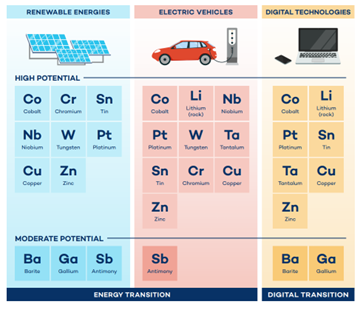
Still, integrating ASM into mainstream supply chain strategies will require a shift in mining sector policy and the approach of the largest players in the global minerals and mining value chain.17 The World Bank’s publication of its renewed ASM framework signals this new direction, which emphasizes creating platforms for investment and strengthening government capacity to enable more durable and scalable improvements.
Stewardship’s Role in Creating Resilient Mineral Supply Chains
As ASM remains an unavoidable component of critical mineral supply chains, investing in traceability and proactive engagement offers a far more effective long-term strategy than simple avoidance. For companies, this is about mitigating risk; for investors, it is about understanding which path companies directly or indirectly linked to ASM are taking.
Keeping ASM at the center of industry dialogue is therefore essential. In December 2025, Sustainalytics Stewardship Services convened an online roundtable to advance this discussion. The session brought together representatives including an asset owner, a multistakeholder initiative, and businesses operating in green technology, smelting, and small-scale mining. More than 40 companies and investors joined the event, reflecting the growing urgency and shared responsibility across sectors.
Active ownership remains a critical lever in this space. Through our Human Rights and Transition Program, we engage companies across mining and renewable energy supply chains, with good ASM-related practices as one priority, to ultimately support the development of resilient, responsible mineral supply chains.
References
- International Energy Agency (IEA). 2022. The Role of Critical Minerals in Clean Energy Transitions. https://iea.blob.core.windows.net/assets/ffd2a83b-8c30-4e9d-980a-52b6d9a86fdc/TheRoleofCriticalMineralsinCleanEnergyTransitions.pdf.
- Deutsche Gesellschaft für Internationale Zusammenarbeit (GIZ) GmbH. 2025. Artisanal and Small-Scale Mining Formalisation: A German Development Cooperation Perspective and Beyond, p.1. https://rue.bmz.de/resource/blob/274766/asm-factsheet.pdf.
- European Partnership for Responsible Minerals. 2024. Fostering responsible artisanal and small-scale mining for reliable mineral supply chains https://europeanpartnership-responsibleminerals.eu/attachment/entity/91fb9670-e4bc-4998-bbe4-343277dfbbeb.
- Ibid.
- Pijpers, R & Luning, S. 2021. “‘We have so many challenges’: Small-scale mining, Covid-19 and constant interruptions in West Africa.” Anthropology Today 37(2): 10-14 (April): https://doi.org/10.1111/1467-8322.12641.
- The statistics on women presence in ASM vary from 18% (World Bank, 2020a, p.91) to 30% (Delve, 2023) to 50% (IGF, 2018), underscoring the lack of transparency and data in the sector. Delve. 2024. 2023 State of the Artisanal and Small-Scale Mining Sector p. 5. https://www.delvedatabase.org/uploads/resources/Delve-2023-State-of-the-Sector-Report-042324-Compressed.pdf.
- European Partnership for Responsible Minerals. 2024. Fostering responsible artisanal and small-scale mining for reliable mineral supply chains, p. 8. https://europeanpartnership-responsibleminerals.eu/attachment/entity/91fb9670-e4bc-4998-bbe4-343277dfbbeb.
- Sudan Tribune. 2026. “13 miners killed in Sudan gold mine collapse”. January 13, 2026. https://sudantribune.com/article/309966.
- Salama, Or. 2025. “The current state of child labour in cobalt mines in the Democratic Republic of the Congo”. May 27, 2025. Humanium. https://www.humanium.org/en/the-current-state-of-child-labour-in-cobalt-mines-in-the-democratic-republic-of-the-congo/. Accessed February 7, 2026.
- Sustainability Directory, Responsible Cobalt Sourcing. 2025. https://energy.sustainability-directory.com/term/responsible-cobalt-sourcing/.
- Ahne, A. 2025. Organization for Economic Cooperation and Development - Responsible Mineral Supply Chain Conference’s Session “Operational challenges for artisanal and small-scale mining (ASM) cooperatives”. https://www.oecd-events.org/e/responsible-mineral-supply-chain-2025/en/onlinesession/e85b99d3-2df5-ef11-90cb-6045bda07d25.
- Project “TinLink”. Accessed March 27, 2026. https://tinlink.eu/project/.
- The EU block initially laid out plans in the Green Deal (2020) on how it intends to become carbon neutral by 2050. Revised goals and objectives are enshrined in the Critical Minerals Act, 2023, following which a revised list (the fifth iteration) of Critical Raw Materials was published (European Commission, n.d.). The bloc’s ambitious plan to reduce emissions by at least 55% from 1990 levels by 2030 is also included in the Green Deal. See The Intergovernmental Forum on Mining, Minerals, Metals and Sustainable Development (IGF). 2024. Artisanal and Small-Scale Mining of Critical Minerals, p. 33. https://www.iisd.org/system/files/2024-12/artisanal-small-scale-mining-critical-minerals.pdf.
- Goss, B. 2023. “Mining & Mineral Exploration Differences”. August 24, 2023. Rangefront Mining Services. https://rangefront.com/blog/mining-mineral-exploration/. Accessed March 2, 2026.
- The Intergovernmental Forum on Mining, Minerals, Metals and Sustainable Development (IGF). 2024. Artisanal and Small-Scale Mining of Critical Minerals, p. 32. https://www.iisd.org/system/files/2024-12/artisanal-small-scale-mining-critical-minerals.pdf.
- Ibid.
- Eslava, N. 2018. “Successful implementation of conflict mineral certification and due diligence schemes and the European Union’s role: lessons learned for responsible mineral supply”. STRADE project. https://stradeproject.eu/fileadmin/user_upload/pdf/STRADE_Report_D4.19_Due_Diligence_Certification.pdf.
.tmb-thumbnl_rc.png?Culture=en&sfvrsn=a680a273_1 "2026_SUS_Blog_Exploration_V5_SIP_Resource_Center_Sans_Type (1)")