



The ESG Risk Ratings: Exploring the Internet Software and Services Subindustry
In the second installment of our ESG Risk Ratings white paper series, we assess the unmanaged ESG risk of 42 Internet Software and Services (ISS) companies. In addition, the report offers a comprehensive ESG risk analysis of the subindustry and concludes with a case study of Facebook.

10 for 2020: Creating Impact Through Thematic Investing
The UN Sustainable Development Goals (SDGs) are playing an increasingly important role in shaping the sustainability roadmaps of investors, governments and civil society groups. In Sustainalytics’ thematic research report, 10 for 2020: Creating Impact Through Thematic Investing, we present investors with ten ESG investment themes that can positively contribute to advancing the SDGs.
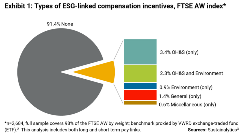
The State of Pay: Executive Remuneration & ESG Metrics
With investors increasingly incorporating ESG considerations into their investment decisions, many are looking into how corporate leadership may be incentivized to pursue an ESG agenda. This report offers insights to global equity investors considering pay-links as a topic for corporate engagement.
Sustainalytics' Feeding the Future Engagement
Food production is a leading contributor to global GHG emissions, deforestation, water stress and biodiversity loss, and the sector is increasingly under scrutiny to mitigate its environmental footprint. A failure to manage related impacts and adapt to changing consumer trends could result in material business risks or missing out on opportunities. Land and forest investments could become stranded assets. Sustainalytics will also provide a preview of its new thematic engagement, Feeding the Future.
Sustainalytics’ CEO Michael Jantzi Featured in Clean50 Webcast Series
We are excited to share that Sustainalytic’s CEO Michael Jantzi, participated in a clean finance podcast hosted by Canada Clean50 as part of their #CleanReset initiative. In the company of fellow leading clean finance experts, the dialogue is an insightful overview of how Canada’s current position on ESG regulation may impact financial sustainability for large Canadian corporations.

Access to Nutrition Index 2016
Since the launch of the first Index, recognition of the human and economic consequences of poor nutrition has increased. Globally one in three people are now either undernourished, overweight or obese. Over the last 35 years obesity has more than doubled and has now reached epidemic proportions. Over the next 10 years, malnutrition is set to continue to increase.

The ESG Risk Ratings: Moving Up the Innovation Curve
To provide our clients with a better understanding of the ESG Risk Ratings, we published a series of white papers, the first of which presents a brief history of responsible investment and covers the motivations for developing a next generation ESG rating.



The ESG Risk Ratings: Potential Applications for Investors
With our third ESG Risk Ratings white paper, we explore how investors could potentially apply the ESG Risk Ratings to their investment processes. Below are some key takeaways from the white paper. To learn more, register for our regional webinar using the buttons at the bottom of the page.
Nuclear Power and ESG: Can They Play Together?
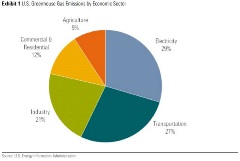
Nuclear power in particular can be a controversial and confusing topic with respect to ESG factors. Sustainalytics, a leading global ESG and corporate governance analytics firm, has joined Morningstar Research Services to present a comprehensive ESG analysis of nuclear power, including a look at carbon emissions intensity, waste management, operational management, public safety, worker safety, and regulatory oversight.

Climate Week’s Financing a Greener Future
The first half of 2020 saw $200bn in sustainable bonds issued globally with green bonds accounting for nearly half of that. As more companies commit to achieving net-zero emissions and as the world shifts to a low carbon economy, the CEO Investor Forum and Sustainalytics welcome industry experts to weigh in on the state of the sustainable finance market during this one-hour virtual event.
Managing data privacy risk: comparing the FAANG+ stocks
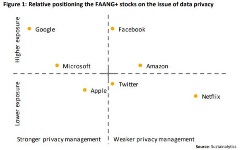
Collecting and processing personal data has become one of the most significant drivers of financial value in today’s economy. But as the upside of personal data grows, so too does the downside risk associated with data security, management and privacy.
.tmb-thumbnl_rc.png?Culture=en&sfvrsn=72dd1885_2 "image (7)")
Tomorrow's Board
The world is changing faster than it ever has. As a result, companies are facing increasingly complex and numerous challenges. They need to adapt faster, and in this process, the board has a crucial role to play. A new vision of the board is needed to help start a process today that will result in them being better prepared for tomorrow’s challenges.

Preparing for a sustainable future through ESG investment and engagement
ING Wholesale Banking (WB) is the commercial banking business of ING Bank N.V. Using a forward-looking financing approach that incorporates environmental, social and governance (ESG) considerations, ING WB provides banking services for large, multinational corporate clients, banks, insurance companies and other institutional investors.


Mirova: Food Security - Closing the Food Gap
Solutions for closing the food gap are likely to come from both production innovations and changes in consumption trends: on the one hand, it is essential that we increase the supply of food, while on the other, there is real potential for a reduction in demand for certain commodities.

.tmb-small.png?Culture=en&sfvrsn=2b2a9c60_2 "image (3)")
Progress report on investor expectations and corporate benchmark in cocoa
GES has engaged the cocoa industry for many years to increase its effort in tackling the issue of child labour. As a part of its long-term engagement, GES published its second public report on the issue, including investor expectations and a corporate benchmark of leading cocoa and chocolate companies.