


.tmb-small.png?Culture=en&sfvrsn=2b2a9c60_2 "image (3)")
Progress report on investor expectations and corporate benchmark in cocoa
GES has engaged the cocoa industry for many years to increase its effort in tackling the issue of child labour. As a part of its long-term engagement, GES published its second public report on the issue, including investor expectations and a corporate benchmark of leading cocoa and chocolate companies.
Finding your path in the upcoming ESG regulations
Finding your path in the upcoming ESG regulations: A spotlight on EU Taxonomy and Disclosures The Taxonomy is a classification framework, part of the EU Sustainable Finance Action Plan, designed to determine whether an economic activity is environmentally sustainable.
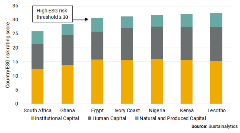
New Frontiers: African Sovereign Debt and ESG Risk
In New Frontiers: African Sovereign Debt and ESG Risk, we leverage our Country Risk Ratings to analyze ESG risk among African countries. Our findings show country-level ESG risk and average sovereign credit ratings exhibit a strong positive correlation.
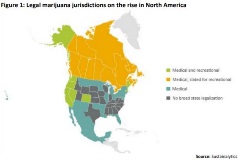
The Budding Cannabis Industry: A first look at ESG Considerations
While investors are being drawn to the cannabis industry by the lure of an expanding market and profit potential, uncertainties around regulations, scalability and potential stock price corrections remain. Underexplored ESG risks could also present material concerns for management teams and investors entering the industry.
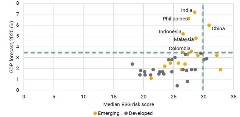
Emerging Markets Equities: Key Sources of ESG Risk
Based on our analysis, we find that investors in the FTSE Emerging Index are exposed to over 14 percent more unmanaged ESG risk than those in the FTSE Developed Index. The ESG risk gap between these indices is largest on the issue of data privacy and security. In addition, investors in select equity markets, such as China, may face a trade-off between chasing higher economic growth and mitigating portfolio ESG risk.

.tmb-small.jpg?Culture=en&sfvrsn=60d17804_2 "thumbnail (4)")

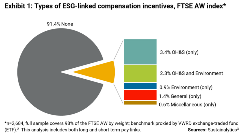
The State of Pay: Executive Remuneration & ESG Metrics
With investors increasingly incorporating ESG considerations into their investment decisions, many are looking into how corporate leadership may be incentivized to pursue an ESG agenda. This report offers insights to global equity investors considering pay-links as a topic for corporate engagement.

Investor Guidance on Integrating Children’s Rights into Investment Decision Making
Sustainalytics in collaboration with UNICEF, The United Nations Children’s Fund, has published a new report titled, Investor Guidance on Integrating Children’s Rights into Investment Decision-Making. The guidance offers investors a practical toolkit on how to incorporate children’s rights into investment analysis and engagement activities.

.tmb-small.png?Culture=en&sfvrsn=22076ca_2 "image (6)")
ESG Transparency Poland (Polish Report)
Since 2012, GES together with the Polish Association of Listed Companies, a self-government organization of companies listed on the Warsaw Stock Exchange, has been involved in an educational project ESG analysis of companies in Poland aimed at increasing disclosure and transparency of reporting on non-financial indicators.
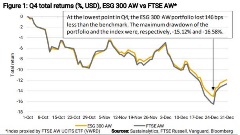
Beware of Bears: A Look Back at the Downswing of 2018
Overlaying Sustainalytics’ ESG Risk Ratings onto the FTSE AW Index, we found that 24 percent of the benchmark’s market cap was rated as having high to severe levels of ESG risk. In addition, over the course of Q4 2018 the negligible to low ESG risk companies outperformed the benchmark by 55 basis points. Our sample portfolio containing 300 best-in-class ESG performers would have returned 77 basis points more than the benchmark in Q4.
.tmb-small.png?Culture=en&sfvrsn=12e8d376_2 "image (5)")
Water Stewardship Engagement
The Water Stewardship and Risk Engagement combines both scale and detail, and covers the food and beverage, mining and garment sectors, which are associated with a high level of water risk. This engagement links water policy and practices in these three sectors to the targets of Sustainable Development Goal 6 (to ensure the availability and sustainable management of water and sanitation for all)
f6f40ef6-31ad-42df-b35f-128241ea958e.tmb-small.png?Culture=en&sfvrsn=3c436c0f_2 "image (6)")
ESG Transparency Poland (English Report)
Since 2012, GES together with the Polish Association of Listed Companies, a self-government organization of companies listed on the Warsaw Stock Exchange, has been involved in an educational project ESG analysis of companies in Poland aimed at increasing disclosure and transparency of reporting on non-financial indicators.

Gaining Ground: Corporate Progress on the Ceres roadmap for Sustainability
This report, Gaining Ground: Corporate Progress on the Ceres Roadmap for Sustainability, evaluates how well 613 of the largest, publicly traded U.S. companies are integrating sustainability into their business systems and decision-making. The report— a collaboration between Ceres and Sustainalytics—assesses corporate progress across the four strategic areas first outlined in 2010 in the Ceres Roadmap for Sustainability: Governance, Stakeholder Engagement, Disclosure and Performance.

Combatting Child Labour: Investor expectations and corporate good practice
GES has engaged the cocoa industry for many years to increase its effort in tackling the issue of child labour. As a part of its long-term engagement, GES published its second public report on the issue, including investor expectations and a corporate benchmark of leading cocoa and chocolate companies.
Perspectives on Modern Slavery (Australia)
An estimated 40 million people are currently oppressed by modern slavery and companies are under increasing pressure to manage this issue to mitigate operational disruptions as well as compliance and reputational risks. Sustainalytics, FSI and Suncorp tackle this issue on Sustainalytics’ Perspectives on Modern Slavery – Australia webinar.

10 for 2018: ESG Risks on the Horizon
In 10 for 2018, we focus on the ESG issues we anticipate could pose significant risks for investors. The ESG issues in focus fall into four broad themes: water management, climate change, consumer protection and stakeholder governance. Learn more about the stories behind these issues below.